How to Choose the Right Deep Well Pumps for Your Property
Water wells define a certain independence. They demand care, budgeting, and a willingness to understand the machinery beneath the surface. When you stand at the edge of a yard, or kneel in a dusty basement, the decision to buy a deep well pump becomes more than a purchase. It becomes a commitment to reliable water pressure, steady output, and a system you can trust when rain is scarce and your household depends on that underground supply.
The truth is that the market for deep well pumps is broad enough to challenge even experienced DIYers. There are submersible pumps that live in the well casing and jet pumps that live above ground. Each type has a specific set of strengths, limits, and maintenance routines. The right choice hinges on your well depth, the yield of the aquifer, the size of your house, and the way your family uses water day to day. As someone who has installed pumps on rural properties and helped families troubleshoot stubborn water problems, I’ve learned to look beyond sticker price and marketing claims. What matters is how the pump behaves in your actual line, with your pipes, your pressure tank, and your habits.
This article walks through practical criteria, real-world constraints, and the kinds of trade-offs that shape a solid purchase. You’ll find guidance on sizing, efficiency, durability, installation realities, and the kinds of service you can expect from manufacturers and local dealers. By the end, you should feel equipped to narrow your options with confidence and avoid common missteps that lead to premature wear or periods of low pressure.
Understanding your water source and demand
Begin with the well as a system, not just a machine. A pump does not operate in isolation. Its performance is defined by how much water the well produces, how hard your home draws it, and how well the rest of the system can store and regulate that water. The first step is to gather baseline data, even if it means a quick field test with a low-tech approach.
If you have a recent well log, pull it out and note the well depth and static water level. The static water level is the height from the ground to the surface of the water when the well is not pumping. The deeper the water sits, the more a submersible pump in the well tends to be favored, because it can lift water directly from depth with less voltage drop and less risk of air being drawn into the system. Conversely, if the well yield is limited or the water level drops significantly during pumping, you need a pump that can maintain flow without overtaxing the motor or the pressure tank.
A practical rule I’ve used over many installations is to target a continuous peak water delivery that exceeds your daily household need by a comfortable margin. If a family uses roughly 350 gallons per day on weekdays and higher on weekends, sizing for a sustained 400 to 600 gallons per day in a high-usage scenario provides a cushion. The goal is not just peak capacity but consistency. A pump that meets peak demand for a few minutes and then stalls does more harm than good. It causes pressure fluctuations, wears out check valves, and can degrade the well lining if the cycling is extreme.
Choosing between submersible and jet pumps
The two main families of deep well pumps share a big goal: move water from a deeper source to your home reliably. They reach that goal through different means and with different implications for maintenance and cost.
Submersible pumps live in the water. They are sealed against the dampness of the borehole, and they push water up through the pipe with a motor that sits below the water line. They tend to be quieter in operation, and their design makes them robust in deeper wells. If your well depth runs 100 feet or more, a submersible often makes sense, especially when you anticipate a long service life with minimal surface-level plumbing challenges.
Jet pumps sit above the well and typically draw water using two elements—a pump above ground and a venturi or ejector assembly in the well. They can handle shallower wells better and can be easier to service for some homeowners because you can access the pump without lowering equipment into the borehole. Jet pumps can be a sensible option when the well is moderately deep and the static water level isn’t too far below the top of the casing. Still, because jet pumps move water using atmospheric pressure and suction, they can be more sensitive to losses in the suction line, and a poorly sealed tank or an air leak in the line becomes a larger concern.
In practice, you’ll see a lot of mixed setups. A shallow well with high yield may use a jet pump with a high-capacity storage tank to smooth the supply. A deep well with a stable yield often leans toward a submersible pump paired with a modern pressure tank and a good check valve. The important thing is to evaluate the entire flow path: the depth, the yield, the piping diameter, the check valves, the pressure tank size, and the electrical supply. The best choice is the one that maintains steady pressure with the least downtime and the lowest energy cost given your well’s characteristics.
Sizing for demand, pressure, and efficiency
Sizing is where many homeowners stumble. It’s tempting to grab a pump with a high maximum horsepower or a big number on the box, but what matters is the operating point—the flow rate at the head (the pressure the pump must overcome). If you pick a pump that’s too big for your well, you risk short cycling, overheating, and accelerated wear. If your well is robust but the pump is too small, you’ll chase pressure, and the system will cycle on and off, creating noise, poor irrigation performance, and an inconsistent shower.
In a practical sense, you want to know three things before you buy: your required gallons per minute (GPM) for peak usage, the head pressure you need at the furthest fixture, and the installed horsepower that your electrical service can support. The typical home needs range from about 5 to 15 GPM for average family usage, with spikes for irrigation or multiple simultaneous draws. A 1/2 horsepower pump is common for small households with shallow wells or modest water requirements, while larger homes or deeper wells sometimes require 3/4 horsepower or 1 horsepower units. But the exact numbers depend on your pressure tank size and the well’s ability to supply water at the desired rate.
The pressure tank acts as a buffer. A small tank means the pump will start and stop frequently, which wears the motor and accelerates wear on the switch. A larger tank keeps the pump from firing up as often, delivering a steadier water supply with less energy use per gallon delivered. In a well-designed system, the pump does not operate constantly; it maintains a target pressure range. A typical setup might be a 40- to 60-psi cut-in and 60- to 80-psi cut-out range. The exact numbers depend on household needs, the plumbing layout, and what your local codes allow. If you are upgrading an older system, consider increasing the tank size and implementing a modern pressure switch that handles more precise cycling and offers better protection against short cycling.
Durability and materials
Pumps are mechanical devices that endure constant cycling, water exposure, and, sometimes, mineral-rich water that can cause scale buildup. The choice between stainless steel and cast iron bodies, and the kind of seals or gaskets used, matters more than many homeowners realize. Stainless steel pumps tend to resist corrosion and scale better, particularly in areas with hard water or high mineral content. They can be worth the premium if you expect to stay in the home long enough to recoup the extra investment. For some properties, a well with aggressive mineral content can turn an affordable pump into a recurring maintenance project. In those cases, a rugged, corrosion-resistant pump paired with a chemical-free filtration or a water softener can be a sound combination.
The motor design also matters. A pump with a high-efficiency motor and properly rated bearings will save energy and extend service life. In rural settings, you may not have easy access to a technician who can work on the motor, so a model with a proven track record and readily available replacement parts becomes a pragmatic choice. I’ve seen units from brands with a long history in the field deliver dependable performance for decades, provided they are installed correctly and maintained on schedule. Preventive maintenance matters more than fancy features. A clean strainer, a sealed wiring harness, and a properly sized pressure switch can make a surprising difference in reliability.
Installations realities: wiring, priming, and the hidden costs
Electrical supply is often the limiting factor in pump performance. A submersible pump in a deep well can demand a few amps and must be wired with appropriate gauge copper conductors and proper bonding. A common mistake is to underestimate the circuit requirement, especially when the pump motor is paired with a pressure tank and an automatic switch. When the circuit is under-protected, you’ll trip breakers and risk overheating the motor. If your house uses a 120-volt service for the well pump, you may be able to run the pump on a single circuit, but for larger horsepower, you’ll likely need 240-volt service. Depending on your local codes, you might also require a dedicated line with a ground fault circuit interrupter (GFCI) and a properly sized conduit.
Priming and priming-related issues are more common with jet pumps. If the suction line has an air leak, if there is a crack in the seal, or if you have a buried shutoff valve that traps air, the pump will struggle to draw water. The remedy is not always dramatic: sometimes it is as simple as tightening a loose connection or replacing a worn O-ring. But you may need a complete inspection of the well cap, the dropping pipe, and the check valve if the problem persists.
The bottom line is that installation is not just the pump and a switch. It is a network of elements: the well drawdown, the piping diameter, the check valve placement, the tank, the gauge readings, and the electrical supply. Working with a qualified installer who can review all components and test the system under load pays off. A well-taired service tech can verify that the pump is not overshooting its duty cycle, that the pressure tank is correctly charged, and that the wiring is protected from moisture and from physical damage.
Where to buy and what to expect from support
As you shop for deep well pumps, you will encounter a spectrum of options in terms of brand, price, and service packages. A practical approach is to identify a few models that match your well characteristics and then compare them against a real-world bundle of support considerations: warranty length, parts availability, and the experience of local service technicians with those brands.
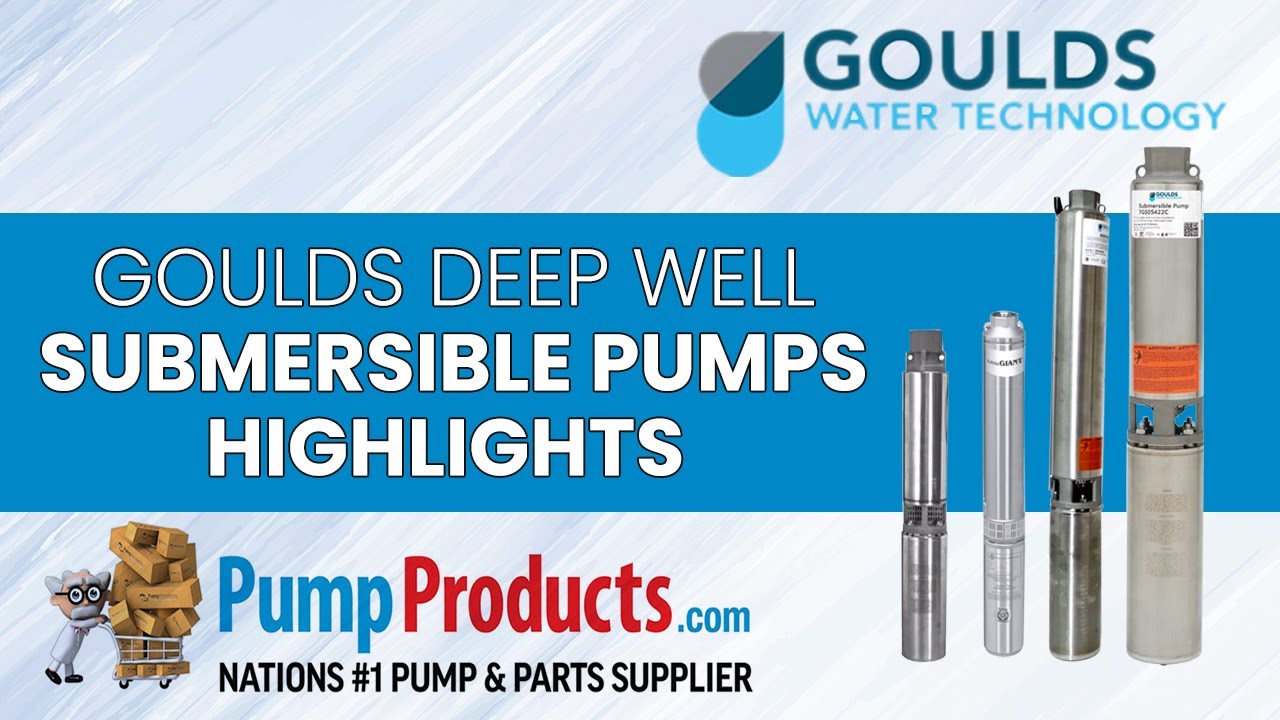
Goulds deep well pumps are a familiar name for many homeowners. If you are evaluating Goulds pumps, you may be weighing factors such as the quality of the impeller design, the ease of obtaining replacement parts, and the compatibility of Goulds models with common pressure tanks on the market. The question is not whether Goulds offers a better pump, but whether a specific Goulds model integrates cleanly with the rest of your system and the way your household uses water. If a dealer has a ready supply of Goulds parts and offers service contracts or repair pricing, that can influence your decision as much as the initial price.
For most buyers, the process looks like this: identify 2 to 3 models that meet the required head and GPM range, confirm the electrical service available in the home, request a quote that includes installation and any required valve assemblies, and check the lifetime parts stock at the local supplier. It is reasonable to expect that a reputable dealer will provide detailed performance curves for the selected models, including flow rate versus head pressure and the expected energy consumption. You should also ask about warranty terms for both the pump and the motor, as well as what coverage exists for seals and impellers in the event of mineral buildup or wear.
Budget realities and long-term value
The price tag on a deep well pump is a useful guide, but it does not tell the full story. A cheaper unit may save money upfront but can cost more in energy usage and maintenance over a decade. A higher-quality motor, more durable seals, and a well-mitched control package can reduce downtime and improve the user experience. You will often discover that the most important measure of value is not the purchase price but the likelihood of smooth operation over time.
If you plan to stay in the home for many years, consider the total cost of ownership: initial purchase, installation, energy usage, maintenance, and potential service calls after the warranty period. A well-designed system with a robust pressure tank and a motor that runs cool and steady will deliver tangible savings in terms of fewer unplanned outages and a longer service life. On the other hand, if you are in a temporary situation or your well yield is uncertain, you might opt for a more modest setup that keeps costs manageable while still delivering reliable water for essential uses.
Maintenance routines that protect your investment
A deep well pump is a long-term investment that benefits from consistent, simple maintenance. The best practice is to schedule regular inspections of the pump, pressure switch, check valve, and pressure tank. In addition to professional service, some tasks can be handled by a careful homeowner with basic tools and a willingness to learn. Here are practical maintenance touchpoints that have paid off in real-world installations:
- Test the pressure switch and gauge to ensure the system maintains a stable range. A failing switch or a miscalibrated gauge is a common source of pressure swings and pump short cycling.
- Inspect the check valve and well piping for leaks. A small air leak in the suction line can dramatically reduce pump performance over time.
- Check the tank air charge and adjust as needed. A standard rule is to measure the air pressure when the tank is not depressurized, and set it to about 2 psi below the cut-in pressure.
- Keep to a predictable maintenance schedule. Even when the system seems to run well, annual checks for mineral buildup, seals, and corrosion can prevent hidden failures.
- Treat the water if mineral content threatens the pump. Hard water can cause scale buildup on the impeller and inside the well piping, and a suitable filtration approach may be warranted depending on the water chemistry.
Two practical checklists you can reference without turning this into a long weekend project

First, a quick buyer’s help to keep you focused:
- Confirm the well depth and static water level, along with the typical daily water usage of the household.
- Determine whether the well can sustain 10 or more gallons per minute during peak demand, and identify the head pressure you must achieve to reach the farthest fixture.
- Decide between submersible and jet pump based on well depth, available space, and maintenance preferences.
- Check electrical service capacity and needed wiring, including whether 240 volts is available and required.
- Compare models with the same head and GPM targets for energy efficiency, motor design, and warranty terms.
Second, when you are finalizing installation:
- Verify the pressure tank size and the cut-in and cut-out settings align with household needs.
- Ensure proper sealing and anti-air-leak measures on all suction lines and check valves.
- Confirm the presence of a ground fault interrupter on the circuit and appropriate protection rated for the motor.
- Schedule professional testing to verify pump performance under load, including a run test with multiple fixtures in operation.
- Keep a record of maintenance and replace worn parts before they fail.
A few real-world scenarios to illustrate decisions
I recall a property with a 350-foot deep well and a moderate but consistent yield. The owners had a two-story house with a large garden and a workshop that occasionally drew water during irrigation seasons. They chose a submersible pump paired with a 40-gallon pressure tank. The installation required careful attention to the electrical line, a new 240-volt circuit, and a revised discharge line with a backflow preventer. After installation, the couple reported reliable pressure across the home and irrigation system, even during the peak of summer when the garden needed heavy watering.
Another case involved a shallow well, around 60 feet deep, with significant variability in water yield due to seasonal changes. A jet pump was selected to simplify the above-ground service and accommodate the expected fluctuations. The installed system included a larger pressure tank to buffer flow and a filter to mitigate mineral matter in the water, which in turn extended the period between maintenance intervals. The homeowner appreciated the ease of service for the jet pump, particularly when a service call was needed to adjust the suction lines and valve settings after a winter freeze.
The reality of good support makes a difference. A local dealer who maintains a consistent inventory of common parts and who can provide on-site service within a few days can be worth more than a portion of the purchase price saved at the big-box retailer. You want someone who can bring the model you have chosen, check the alignment with More help your plumbing, and confirm that you have the correct parts ready for the long run.
Where to go from here: making the choice with confidence
If you are standing at the edge of your yard, listening to the faint hum of a well pump as you contemplate the purchase, you are hearing a device that quietly keeps your home functioning through the year. The best decision is one that is anchored in your actual water needs, the realities of your well, and the long-term maintenance plan you are comfortable with.
To begin, gather the essential data about your well and home. Then map your needs against the two broad pump families, submersible and jet, focusing on how each design handles depth, yield, and the way the rest of the system — the pipe, the tank, the switch — interacts with the pump. When in doubt, lean toward a reputable brand with broad parts availability and strong local service. A reliable unit paired with a thoughtful installation can save more worry than the cheapest option and deliver a more comfortable living environment across seasons.
In the end, the right deep well pump is less about the label and more about the fit. It is about the balance between depth, yield, pressure, and the rhythms of your daily life. It’s about choosing a system that delivers water when you flip a faucet, showers that maintain a steady temperature, and irrigation that keeps your landscape thriving without drama. It’s about the quiet assurance that, come rain or drought, your home does not have to hold its breath.
If Goulds deep well pumps are on your radar, treat them as another option to evaluate alongside other reputable brands. Look at the performance curves for the exact model you’re considering, the warranty length, and the availability of replacement parts in your region. Read local reviews and talk to installers who have real experience with your well type. Some properties benefit from a well-rounded approach that combines a capable submersible with a smart controller and a tank sized for their family’s daily needs. Others will find that a robust jet pump, paired with a high-quality check valve and a larger storage tank, provides the steady performance they require.
The beauty of this kind of decision is that it is not a one-size-fits-all moment. It invites thoughtful comparisons, a careful look at the numbers, and a clear sense of how the system will behave under stress. With the right information, you can choose a deep well pump that keeps water moving smoothly, supports your daily routines, and stands up to the test of time.